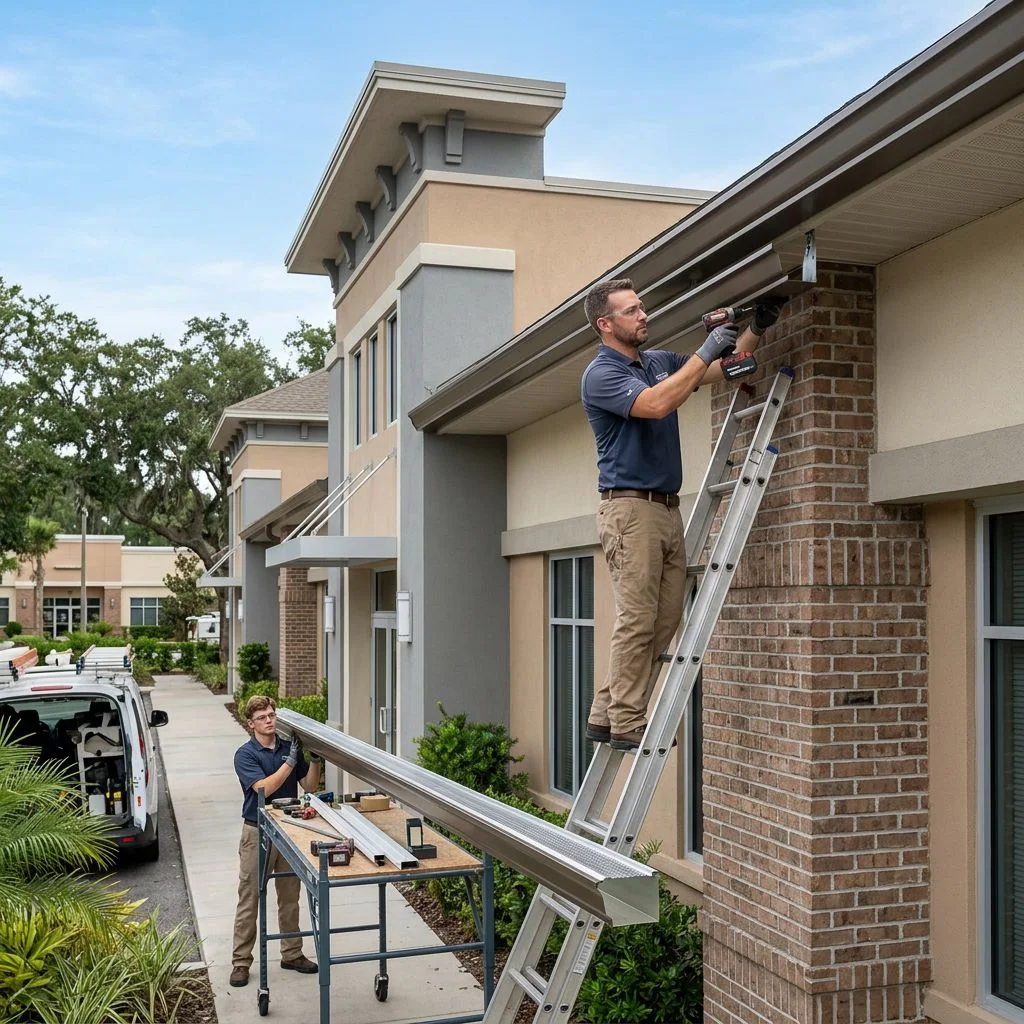
Common Roofline Drainage Issues Unique to Commercial Properties
Commercial buildings often have expansive rooflines with flat or low-slope sections that demand precise gutter pitch and multiple downspouts for efficient water flow. Water overflow near walkways or customer parking areas can create slip hazards and damage landscaping or foundations. Signs such as water staining on fascia and soffits, erosion near the slab, sagging gutters due to extended hangers, and clogged seams filled with pine needles or storm debris reveal drainage problems requiring commercial-grade solutions. Our team inspects these indicators thoroughly to plan repairs or upgrades tailored to your property’s scale and exposure to Jacksonville’s heavy rains.
Materials and Components Specific to Commercial Gutter Systems
Commercial gutters typically use heavier gauge aluminum or reinforced vinyl designed to withstand higher water volumes and harsher environmental conditions than residential systems. Longer gutter runs need sturdy hangers, properly sealed seams, end caps, and multiple outlets to distribute runoff evenly. Downspouts on commercial buildings often include elbows, straps, and extensions directing water away from foundations and public walkways to prevent flooding or soil erosion. Our team assesses these components carefully, recommending seamless gutters when feasible to minimize leaks and rust that frequently appear in sectional gutters under commercial use.
Inspection Focus Areas for Commercial Gutter Maintenance and Repair
When servicing commercial gutters, we scrutinize critical areas like fascia boards and soffits for water damage or rot caused by gutter overflow or leaks. We inspect gutter pitch along expansive rooflines for proper water flow to downspouts, checking for sagging segments or hanging hangers. Seams and joints receive close attention to identify rust, pulling away, or failing seals that cause leaks. We also consider access challenges typical in storefronts, warehouses, and multifamily complexes, recommending scheduled maintenance outside business hours to minimize disruption where possible.
Why Commercial Gutter Service Differs from Other Gutter Solutions
Commercial gutter service focuses on large-scale water management and public safety, unlike typical residential repairs or installations. The complexity of multiple roof levels, extensive gutter runs, higher rainfall volumes, and business operation schedules demands specialized equipment, materials, and planning. Our commercial gutter work balances durability with aesthetics crucial for customer-facing storefronts or multifamily properties. We also factor in flat or low-slope roofing drainage patterns unique to commercial architecture, ensuring water is redirected safely without damaging foundations or heavily trafficked entrances.
How to Prepare for a Commercial Gutter Quote and Service Visit
To provide an accurate quote and schedule efficient service, we ask property managers or owners to share details such as building height, roofline length, and any observed problem areas like specific overflow spots or downspout issues near parking or entrances. Photos of your gutters showing sagging sections, rust, water staining on fascia or foundation erosion help us assess the scope remotely. Informing us about business hours or access restrictions allows our team to plan appointments that avoid customer disruptions. This service information streamlines both pricing and service logistics for your commercial gutters.
Commercial Gutters Inspection and Quote Checklist: What to Look For and Share
- Length and complexity of the roofline and total gutter runs on your commercial building
- Visible sagging gutters or loose hangers along the roofline, especially near public entrances
- Signs of rust or holes at gutter seams and end caps that can cause leaks
- Water staining or rot on fascia boards and soffits indicating poor drainage
- Overflow or pooling water near downspout outlets close to foundations or sidewalks
- Accumulated leaves, pine needles, and storm debris clogging gutters and downspout inlets
- Downspout condition including elbows, straps, extensions, and splash blocks directing water
- Evidence of erosion or foundation staining around the building perimeter
- Presence of flat or low-slope roof areas requiring specialized water flow management
- Business operation hours and access limitations affecting service scheduling
- Photographs showing critical damage areas or roofline drainage problems
- Known trouble spots from previous Jacksonville rain overflow or water infiltration issues
- Material type of existing gutters (aluminum, vinyl, seamless or sectional)
- Size and number of downspouts draining the property’s roofline