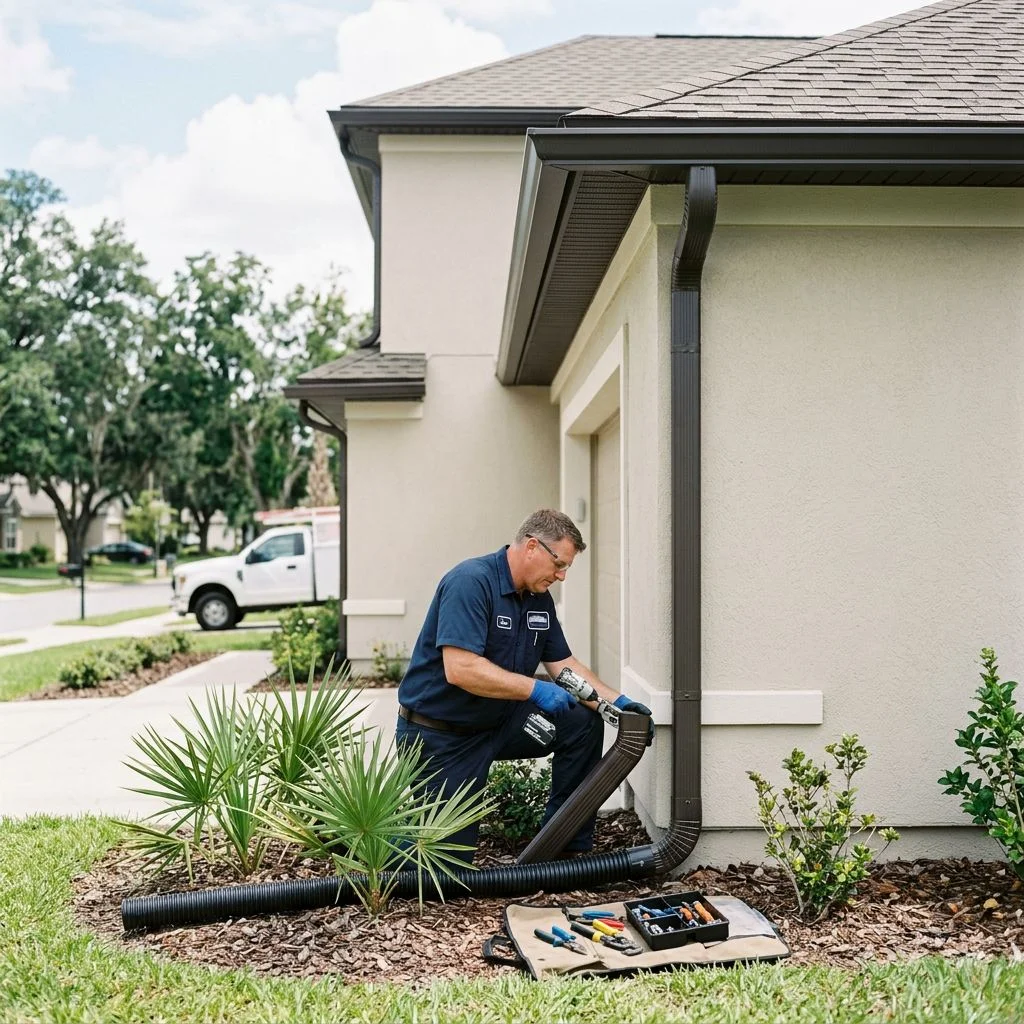
Identifying Leaks and Sagging in Downspout Sections
Downspouts are vulnerable to leaks at connection seams, end caps, and elbows, especially where rust or corrosion appears from constant exposure to Jacksonville rain and storm debris. Sagging or bent downspout runs often develop when straps or hangers become loose or break, causing water to drip behind the gutter and stain fascia or soffits. During repair, our team inspects all sections for leaks at rust spots and checks for sagging runs that disrupt pitch, ensuring water moves smoothly through gutters and downspouts without overflow or blockages near foundation areas.
Securing Loose Hangers and Straps to Stabilize Drainage
Loose or missing downspout hangers and straps cause downspouts to pull away from the fascia, creating gaps where water can splash against the wall or collect near landscaping beds. Our repair work includes reattaching or replacing these metal brackets and fasteners to hold downspouts firmly in place against the home or business exterior. Properly secured downspouts reduce risks of damage during heavy Jacksonville rains and prevent water dumping near slabs, protecting soffits and other roofline components from moisture intrusion.
Fixing Seams, End Caps, and Connection Points
Downspout repairs often focus on sealing leaking seams and replacing worn or damaged end caps that can cause water to escape at critical joints. Connection points between gutter outlets and downspouts require careful examination, as separated corners or loose collars can create overflow during storms. We use corrosion-resistant sealants and replacement parts designed for aluminum or vinyl downspouts typical in Jacksonville properties, preventing water from backing up and causing erosion along the foundation or staining the siding.
Resolving Downspout Connection and Extension Issues
Downspout repair includes addressing problems where the downspout fails to connect properly to splash blocks or underground drainage extensions. Blocked or disconnected downspouts can lead to water pooling right next to the foundation slab, which risks structural damage and soil erosion. Our crew evaluates the drainage direction and modifies or repairs downspout elbows, extensions, and splash blocks to ensure water flows away from the property, safeguarding landscaping and keeping entrances dry after heavy rain events common to the Jacksonville area.
Assessing Damage to Fascia and Soffits from Downspout Failures
Water leaking or dripping behind downspouts or sagging runs can cause soft spots, stains, and rot on fascia boards and soffits. During downspout repair, we inspect these surfaces closely to determine if water damage is present and if additional repairs to fascia or soffits are necessary. Addressing downspout problems promptly helps prevent this kind of hidden damage that often goes unnoticed until overflow causes visible staining or erosion along the roofline, which is critical in Jacksonville’s wet climate.
Downspout Repair Details to Check Before You Call
- Leaks at seam joints or end caps causing water to drip behind gutters
- Sagging downspout sections where hangers or straps are loose or missing
- Bent or damaged downspout elbows interfering with water flow
- Separated or pulled-down downspouts leaving gaps along fascia
- Rust spots on aluminum or vinyl downspout sections leading to holes
- Water pooling near foundation due to disconnected downspouts or missing extensions
- Stains or soft areas on fascia and soffits caused by overflow or leaks
- Overflow or drips observed in a specific corner or section of downspout
- Length and height of damaged downspout runs for accurate repair quotes
- Photos showing connection points where downspouts meet gutter outlets
- Sections where water is dumping near landscaping or slab edges
- Visible erosion or soil displacement under splash blocks or downspout outlets
- Loose or missing strapped downspouts that sway or detach in wind
- Presence of heavy tree debris or pine needles clogging downspout inlets