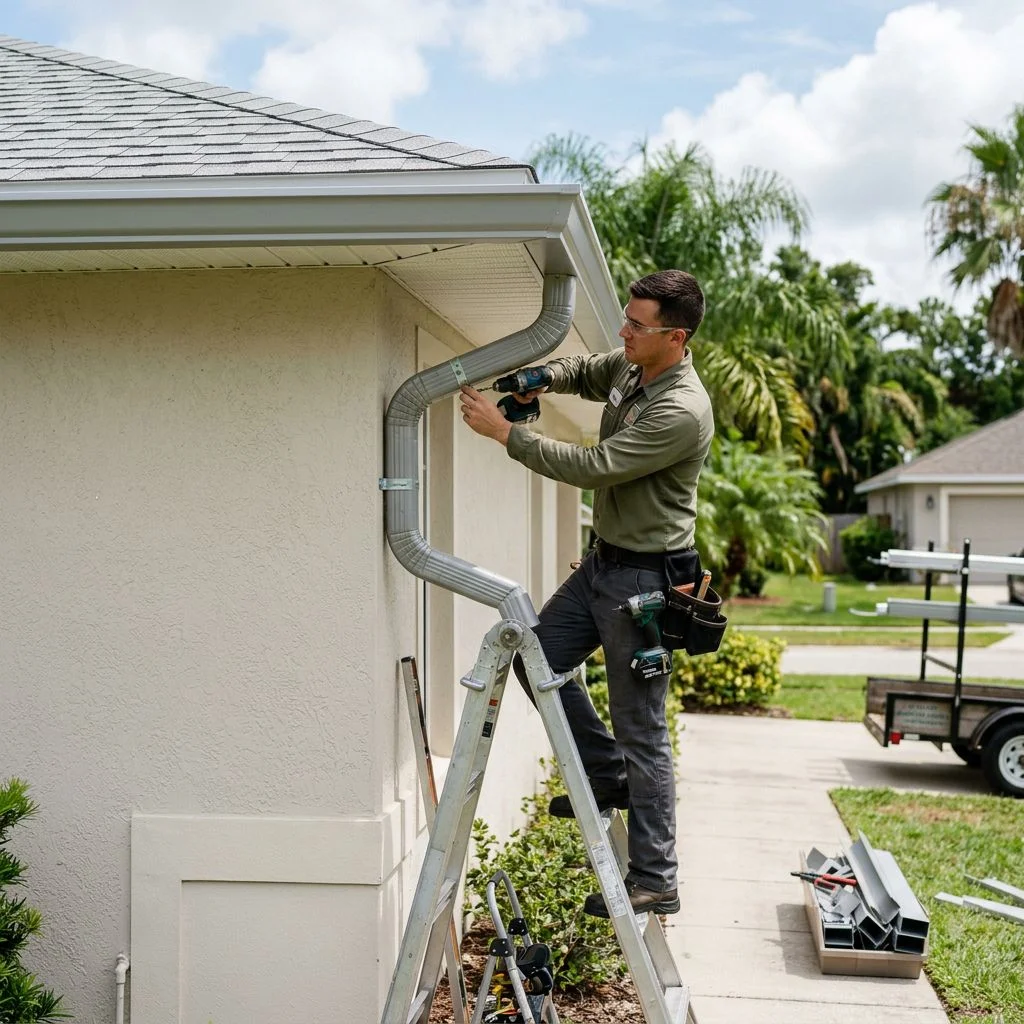
Assessing Roofline Outlets and Downspout Placement
We begin by evaluating your current gutter outlets along the roofline for optimal placement, ensuring each downspout starts where water flow is heaviest. Proper outlet positioning reduces overflow and water backup behind the gutters during Jacksonville’s frequent heavy rainfalls. Our team measures gutter runs carefully to balance downspout spacing and the pitch needed for smooth vertical drainage. Incorrect outlet locations can cause water to dump close to the foundation, leading to staining, soil erosion, and damage to fascia or soffits that support your gutters.
Material Selection and Downspout Components
Downspout installation includes selecting the right materials and parts to handle conditions. We use aluminum or vinyl downspouts that resist rust and deterioration caused by storm debris, pine needles, and grime that accumulate during Jacksonville’s wet seasons. Elbows, corner bends, and straps are installed to secure vertical runs firmly to the fascia, preventing sagging or detachment from wind and water pressure. We also add end extensions and splash blocks to direct water away from the foundation and landscaping, protecting mulch beds and walkways from being washed out.
Customizing Drainage Direction and Extensions
Unlike general gutter work, downspout installation focuses on managing where water exits the roof system. We design downspout runs and extensions that direct runoff well away from your property’s slab to prevent pooling that creates slippery entryways or basement seepage. Our team considers driveways, flower beds, and sidewalks to avoid water damage or staining on surfaces nearby. Splash blocks or drainage pipes are added where necessary to ensure water disperses safely into yard areas or drainage systems without undermining the slab or causing erosion close to your home.
Evaluating Fascia and Soffit Impact on Installation
Downspouts attach to the fascia and run alongside soffits, so their condition significantly affects installation quality. We inspect these surfaces to confirm they can support downspout straps and brackets without damage. Damaged or rotted fascia can lead to loose downspouts or water intrusion behind gutters, causing staining and wood degradation. Our installation approach adapts to different fascia materials and accounts for typical Jacksonville humidity and rain exposure, ensuring secure attachment points that maintain the gutter system’s integrity throughout storm cycles.
Installation Details Affecting Quotes and Scheduling
Downspout installation quotes depend on details such as the number of downspouts required, the length and height of vertical runs, elbow complexity, and extension needs for proper drainage direction. Obstacles near your roofline or landscaping can influence placement strategies and material usage, affecting cost. Photos of your roofline, existing gutters, outlet locations, and foundation runoff areas help us prepare accurate estimates. We also consider property type—residential or commercial—to plan safe access and installation logistics during scheduling.
Key Inspection and Quoting Details for Downspout Installation
- Presence of water pooling or soil erosion near foundation indicating poor downspout drainage
- Visible water dumping beside the slab or washout areas beneath downspout exits
- Number and locations of current downspout outlets along the roofline
- Condition of fascia and soffits where downspout straps and brackets attach
- Lengths and angles of downspout vertical runs, including elbows and corners
- Type of downspout material currently installed or preferred: aluminum or vinyl
- Existing gutters style: seamless or sectional to coordinate downspout design
- Nearby landscaping features requiring splash blocks or extended downspout runs
- Signs of detached or loose downspout elbows caused by storm debris or wind
- Presence of staining on fascia or siding near downspout outlets
- Drainage direction challenges related to driveways, walkways, or mulch beds
- Degree of gutter pitch affecting outlet placement and water flow speed
- Number of downspouts needed to complement gutter runs and roof size
- Obstacles around the property affecting downspout routing like fences or shrubs