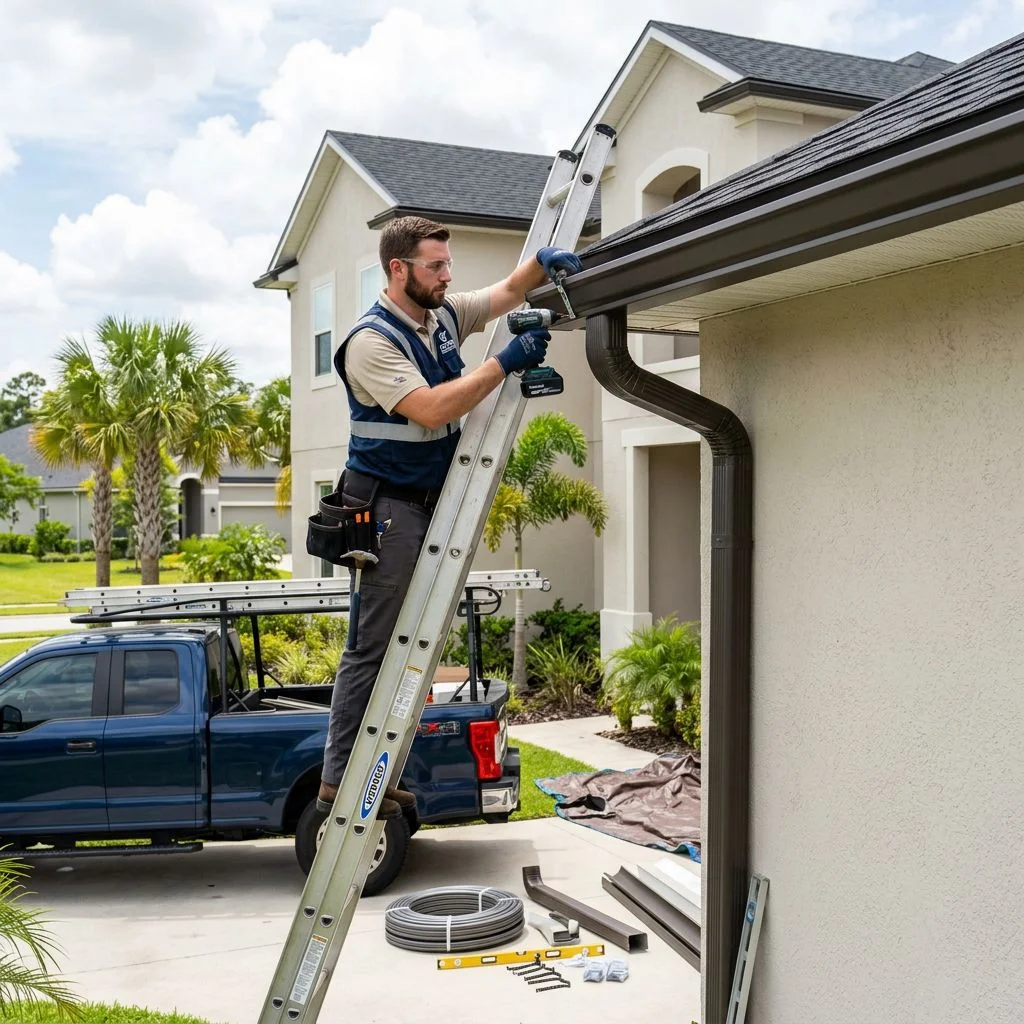
Accurate Roofline Measurement and Gutter Layout
Gutter installation begins with a detailed assessment of your property’s roofline. Our team measures the total gutter runs including every corner, fascia length, and multiple roof elevations if applicable. We account for fascia condition and soffit clearance to determine hanger placement and the number of outlets required. Proper pitch is critical, as gutters must slope slightly to the downspouts so water doesn’t pool or overflow. Without accurate layout and pitch, Jacksonville’s heavy rains can lead to water spilling behind gutters, causing staining and wood damage that new gutters are meant to prevent.
Choosing Seamless vs. Sectional Gutters and Materials
We help you select gutters suited to your property’s style and durability requirements. Seamless gutters, fabricated on site to exact length, reduce seams where leaks and clogs often develop. Sectional gutters are prefabricated in standard lengths and joined on site. Both seamless and sectional gutters are available in aluminum or vinyl; aluminum is more durable and rust-resistant, ideal for Jacksonville’s rain and storm debris. Vinyl gutters offer a cost-effective alternative but can be less resilient under sun exposure. Gutter size selection also depends on roof area and rainfall volume to avoid overflow or splashback onto landscaping and foundations.
Precision Hanger Installation and Gutter Pitch
Installation involves secure hanger placement attached to fascia boards to support gutters along the entire run. We space hangers approximately every 24 inches, ensuring gutters don’t sag or pull away under heavy water flow or storm debris weight such as leaves and pine needles. Correct pitch is calibrated with a slight slope toward the downspouts to maintain continuous water movement and prevent standing water in the gutters, which can accelerate rust or lead to overflow near the foundation slab. Neglecting hanger spacing or pitch contributes to common gutter failures new installation seeks to avoid.
Downspout Location and Managing Rainwater Drainage
Proper downspout placement is essential to directing roof runoff away from your home’s foundation, preventing pooling and erosion. We locate downspouts based on roof valleys, gutter outlet positions, and landscaping layout. When needed, we add elbows, extensions, and splash blocks to channel water at least three to four feet from the foundation slab. Without effective downspout management, heavy Jacksonville rains can cause water to accumulate near the base, damaging concrete slabs, soils, and plants. Our installation ensures controlled drainage that preserves property integrity and reduces maintenance issues.
Inspecting Fascia and Soffits for Installation Readiness
Before installing new gutters, our team evaluates the condition of fascia boards and soffits. Solid, dry fascia is necessary to firmly attach hangers and gutters. Damaged, rotted, or water-stained fascia requires repair or replacement to secure the gutter system safely. Soffits should provide clearance to prevent airflow obstruction and reduce moisture buildup behind gutters. Installing gutters on compromised fascia risks poor alignment, sagging, and leaks. This inspection differentiates gutter installation from repair jobs that focus solely on visible leaks or clogs, emphasizing the foundation for new gutter integrity.
How Jacksonville Rain Influences Gutter Installation Design
Jacksonville’s frequent heavy rainstorms and leaf-heavy environment demand gutters that handle high volume water flow and debris. New gutter installation factor in rain intensity by selecting larger gutters (5” or 6”) with durable hangers and seamless designs to reduce seams where clogs begin. Incorporating sufficient downspouts prevents overflow during storm events. We also consider tree proximity and typical debris such as pine needles and storm grit to design gutter runs minimizing clog risk and overflow problem points often seen in older installations or homes without gutters.
Key Details to Provide for Gutter Installation Assessment
- Total linear feet of roofline requiring gutters including all corners
- Number of stories or building height to determine access and material handling
- Condition and material of fascia boards and soffits along the roofline
- Preference for seamless or sectional gutters and choice of aluminum or vinyl
- Existing drainage issues like water pooling near the foundation or splashback
- Visible signs of missing or undersized gutters causing overflow or soil erosion
- Number and location of roof valleys and gutter outlets planned
- Tree coverage near the home contributing to leaf, pine needle, and debris accumulation
- Current downspout count or need for additional downspouts and extensions
- Slope and pitch concerns for gutter runs affecting water flow
- Accessibility for installation tools and equipment around the property
- Landscaping features near foundations influencing drainage design
- Visible staining or water damage on exterior walls below roofline
- Requirement for splash blocks or drainage extensions to move water away from slab